

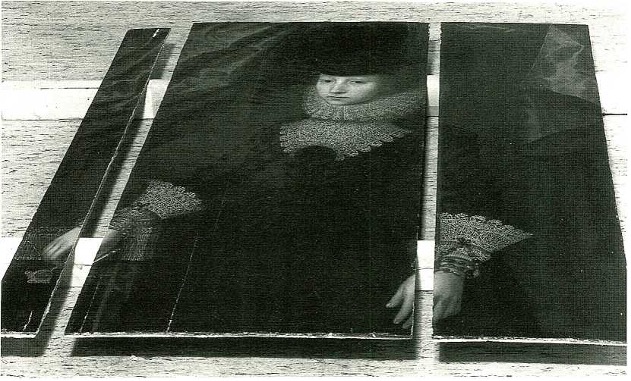
An Antwerp-born artist who introduced grand Flemish portraitist style of vivid precision to the English court in 1616, Paul van Somer (c. 1577/8–1622).
Yet behind his Portrait of a Lady, panel painting, a structural weakness was taking place. A rigid, fixed timber frame on the reverse panel support warped over time, inhibiting the natural movement and the wooden support.
The resulting tension caused flaking to the paint layer to causing and the wood buttons —joining the panel’s three distinct sections—to violently force them to burst away from the back. To rescue the artwork, conservators removed the harmful frame and carefully replaced the decayed sections of the panel support employing stable balsa wood.
Look closely at the right side of the panel, where the original timber buttons remain as remnants of both the painting’s construction and its potential-degrade.
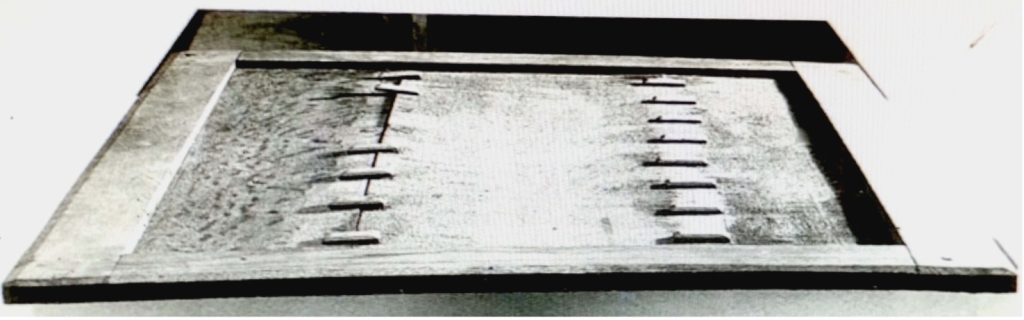
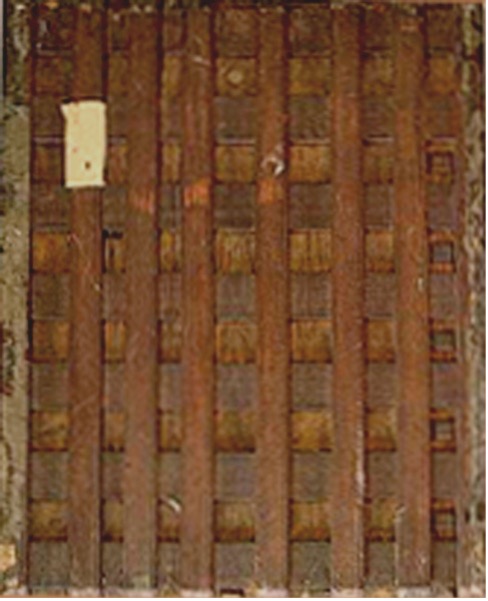
The Seventeenth-century Florentine school has suffered warping because the cradle’s uprights fixed support movable crosspieces have provoked warping in the panel. Note that Several timber buttons are dislodged.
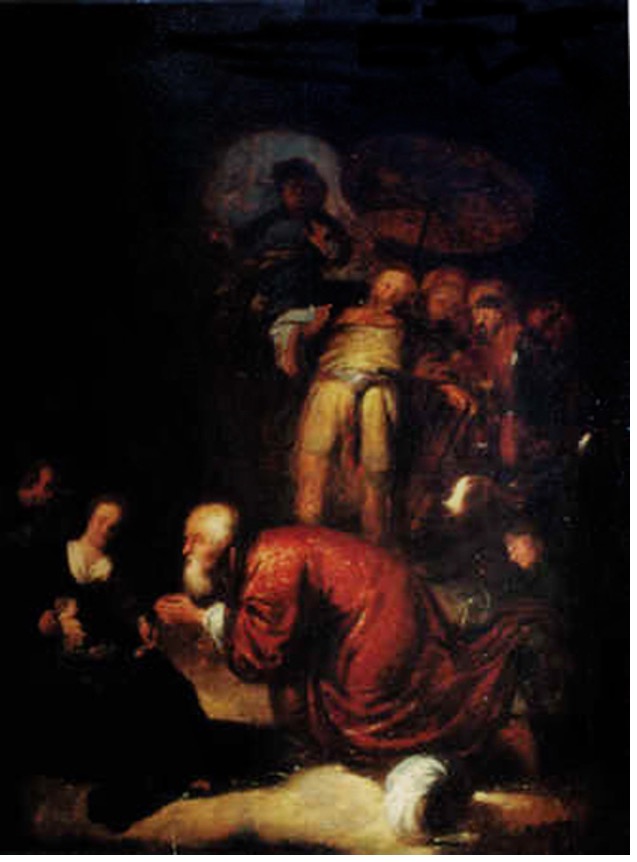
Benjamin Gerritsz Cuyp (1612–1652), Adoration of the Magi. Oil on oak panel, 89 × 69 cm (35 × 27 in).
Cuyp’s mastery of chiaroscuro reflects the influence of the later Rembrandt. To contrast with the deep tones of the oak panel, the artist heightened the illuminated foreground using opaque opaque flat pigments, while earth-toned background figures recede into the darkness.
The physical panel, however, has suffered structural strain. A nineteenth-century conservation treatment attempted to prevent warping by securing the panel’s cross-runners within short uprights. The comparison image—which illustrates the rear of a cradled, seventeenth-century Florentine school panel—the uprights failed to slide freely. This restriction ultimately caused the timber panel to warp.
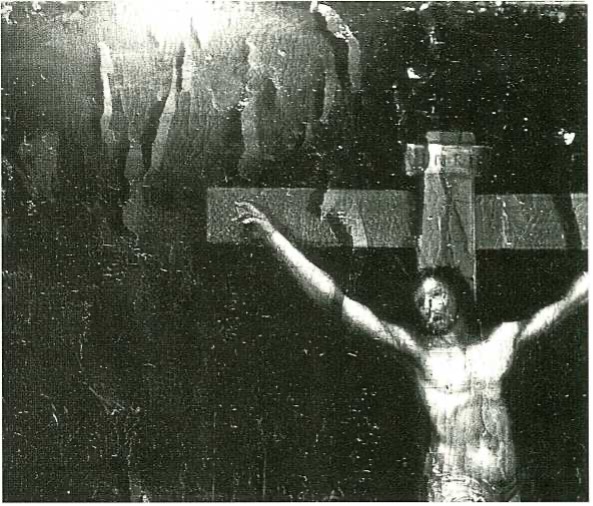
Frans Francken II’s Crucifixion (Antwerp, 1581–1642) faces severe structural degradation. Raking light reveals extensive blistering and paint loss across the surface. This damage is compounded by poor adhesion between the gesso priming and the timber support. Moreover, fixed battens attached to the unstable wood have restricted its natural movement, accelerating the structural decay.
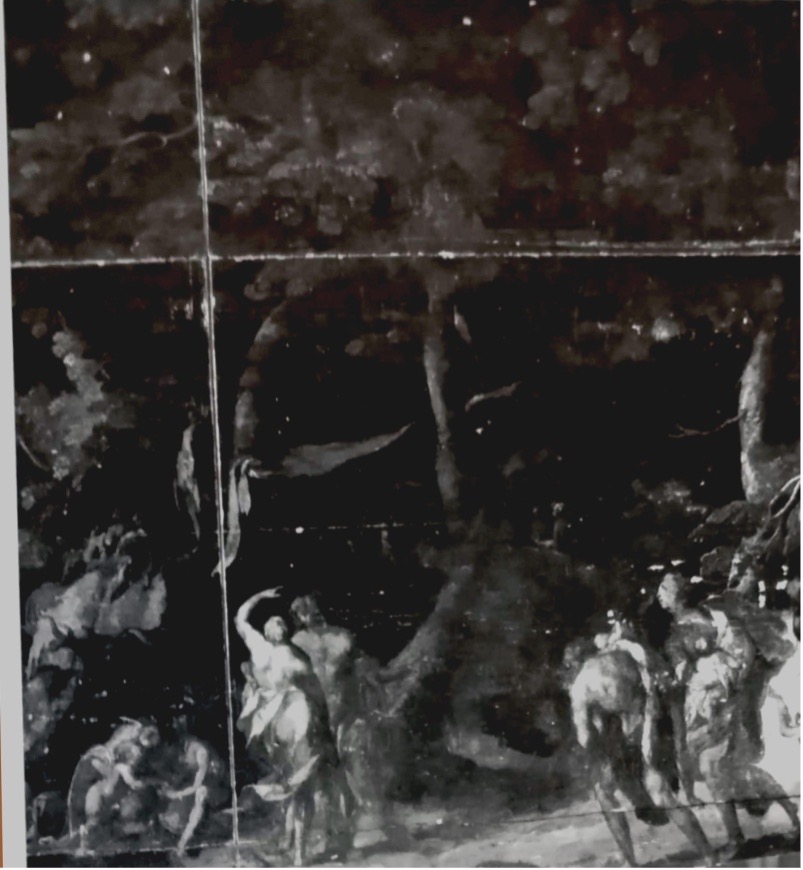
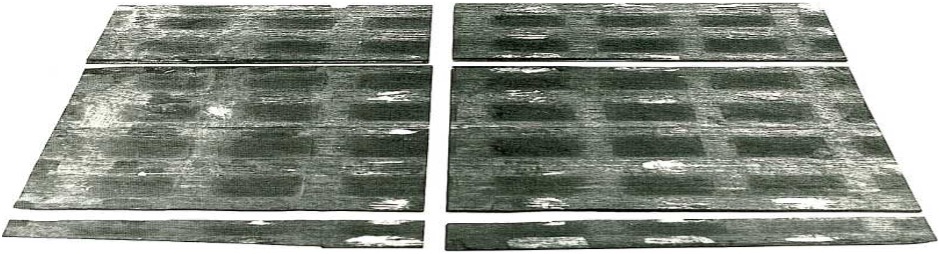
Sawn into six pieces to smuggle it out of communist post-war Eastern Europe, a 17th-century Flemish Fête Champêtre bears the permanent scars of its forced transfer. During its hazardous transport, the painting’s rear support battens disappearing. However, their original position remains clearly visible today: the wood beneath them shows significantly less decay than the rest of the panel, leaving a phantom structural imprint of its wartime survival.
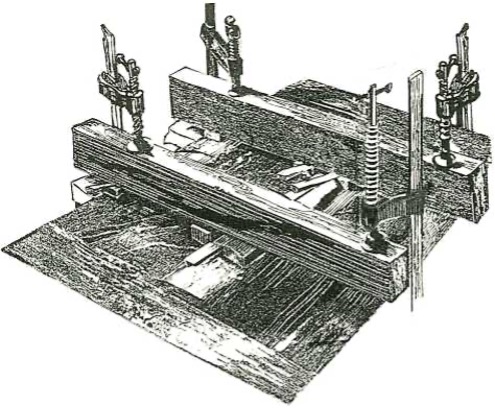
Suppressing a warped Renaissance painting panelsupport required a delicate, mechanical technique.
This archival image captures the technique adopted by conservators at Rome’s Istituto Centrale del Restauro for flattening a buckled timber panel support.
By inserting wooden keys into specific sections, artisans carefully calibrated the tension to restore its original plane. The structural intervention also reveals V-shaped timber veneers, meticulously grafted to reinforce areas where the centuries-old timber support had degraded.